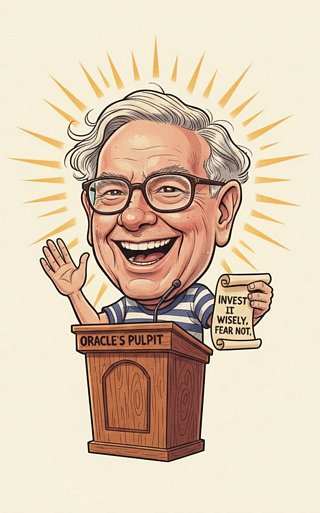
 The new year marked Warren Buffett’s formal handover of the reins as CEO of Berkshire Hathaway to his chosen successor. The transition was deliberate and orderly. It signaled to shareholders and markets that Berkshire’s culture of discipline, patience, and long-term capital allocation is meant to outlive the man who built it.
Over the decades, Buffett has risen to an unusual cultural altitude, especially among devoted adherents of value investing. He’s part financial oracle and part homespun philosopher, dispensing deceptively simple wisdom with the aura of someone blessed with a Midas touch.
His most ardent admirers don’t merely study his methods; they venerate them. His shareholder letters are treated like sacred texts, his offhand remarks are parsed for hidden meaning, and his investing principles are elevated to universal law, supposedly immune to context, nuance, or time.
When Admiration Hardens into Uncritical Reverence
This isn’t to say Buffett’s philosophy lacks substance. His long-term mindset, focus on intrinsic value, and preference for durable businesses over speculation have shaped modern investing. Yet his most devoted followers treat these principles as commandments, overlooking the historical conditions that enabled his extraordinary success.
Buffett began in an era of lower valuations, thinner competition, and scarce financial data. He also enjoyed access to insurance float—an immense reservoir of low-cost capital ordinary investors can’t replicate. Many disciples still believe that faithfully applying his playbook in today’s very different market will produce the same results.
Buffett’s carefully cultivated public persona only deepens this loyalty. His down-home Midwestern charm isn’t accidental; it functions as armor. His accessible soundbites reinforce a comforting worldview in which patient investors always win, markets always recover, and disciplined value investing always triumphs. These narratives glide past inconvenient realities such as Japan’s post-1990 stagnation or the U.S. market’s lost decade from 2000 to 2010. His followers rarely ask for clarification. They don’t notice the cherry-picking or the broad-brushing. They accept the story as delivered.
Even his critiques are selective. Buffett often condemns the high fees charged by hedge funds and asset managers, yet his own early partnerships were structured with lucrative fees and equity stakes. They looked far more like the models he now derides than the mythologized image that surrounds him. He shifted toward long-term business ownership only after securing a substantial percentage stake in Berkshire Hathaway through those early arrangements. His admirers conveniently overlook the contradiction.
Buffett’s Wisdom Should Be Engaged With, Not Obeyed
None of this diminishes Buffett’s stature as a great investor or a compelling role model. His principles will remain valuable, and his track record is undeniable. But unchallenged hero worship is dangerous, especially when it replaces critical thinking with unquestioning allegiance. Many followers repeat his words, absorb his lessons, and apply his ideas without examining whether the underlying assumptions still hold. Markets evolve. Conditions shift. Rigid adherence to any single philosophy can become a liability.
Buffett’s ideas deserve scrutiny, not sainthood. His principles should be examined, not obeyed. Markets reward independent judgment, not intellectual submission. Thinking critically about those we admire isn’t disloyal. It’s essential.
Idea for Impact: Mistaking admiration for devotion that substitutes for analysis is a costly error. Real understanding requires scrutiny, adaptation, and the courage to rethink what once felt certain.
Leave a Reply