• Skip to content
  • Skip to primary sidebar

Right Attitudes

Ideas for Impact

Search Results for: crisis leadership

The High Cost of Too Much Job Rotation: A Case Study in Ford’s Failure in Teamwork and Vision

November 17, 2025 By Nagesh Belludi Leave a Comment

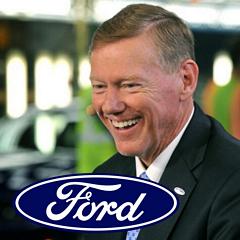
Alan Mulally Dismantled Ford's Fiefdom Culture to Encourage Collaboration When Alan Mulally became Ford’s CEO in September 2006, the company was teetering on the edge of collapse. Ford had just posted a staggering $12.7 billion loss, was hemorrhaging market share to Japanese and Korean automakers, and was weighed down by outdated, inefficient products. Worse, the company was drowning in debt and facing a brutal liquidity crisis. Ford was desperate for a complete overhaul.

By the time Mulally stepped down in June 2014, Ford had staged a stunning turnaround. He unified global operations, streamlined brands, and standardized platforms across regions while refocusing on core markets. He slashed costs, restructured engineering, and poured heavy investment into fuel-efficient vehicles and cutting-edge technologies. Under his steady leadership, Ford weathered the 2008 financial crisis without a government bailout and returned to strong profitability. His tenure remains a powerful case study in corporate transformation.

One of Mulally’s most crucial changes was dismantling Ford’s toxic culture of internal rivalry and reckless short-termism. When he arrived, executives were shuffled through roles every two years, a system meant to create versatile leaders but one that completely backfired. Employees scrambled to make quick impressions rather than collaborate. Engineers routinely ignored predecessors’ work, even at the cost of losing smart, cost-saving innovations. The result was chaos—no continuity, no teamwork, no accountability.

'American Icon Ford Motor Company' by Bryce G. Hoffman (ISBN 0307886069) Mulally understood that leadership demanded stability. After joining Boeing as an engineer in 1969, he rose steadily through key technical and executive positions. He served as Senior Vice President of Airplane Development in 1994, President of Boeing Information, Space & Defense Systems in 1997, President of Boeing Commercial Airplanes in 1998, and finally CEO of Boeing Commercial Airplanes in 2001. Drawing from this deep experience, he extended leadership tenures at Ford, broke down fiefdoms, and fostered a culture of collaboration, discipline, and long-term strategic focus. His approach restored much-needed continuity and accountability, proving that constant job shuffling weakens leadership and that real impact takes time.

Idea for Impact: Exposing leaders to different departments builds broad perspective and prepares them for senior roles. However, they need enough time in each position to take ownership, build relationships, and drive real change. Rapid job rotations erode accountability and disrupt a deep sense of purpose.

Filed Under: Business Stories, Leadership, Leading Teams, Managing People, The Great Innovators Tagged With: Biases, Conflict, Creativity, Employee Development, Goals, Leadership Lessons, Performance Management, Social Dynamics, Teams

People Work Best When They Feel Good About Themselves: The Southwest Airlines Doctrine

August 20, 2025 By Nagesh Belludi Leave a Comment

When People Feel Good, They Work Best: Herb Kelleher and Colleen Barrett's Southwest Way Southwest Airlines didn’t rise to prominence through spreadsheets or sycophancy. It was built by a jolly, chain-smoking Texas lawyer named Herb Kelleher (1931–2019,) who believed that business didn’t have to be boring—or cruel. A maverick in pinstripes, Kelleher co-founded the airline in 1967 with a cocktail napkin sketch and a rebellious grin, determined to inject his irreverent spirit into every corner of the company. He didn’t just want to run an airline—he wanted to run one that laughed in the face of corporate pomposity.

Kelleher’s philosophy was as unorthodox as it was effective. He rejected the sacred cow of “customer first” and instead declared, “If employees are treated well, they’ll treat the customers well. If the customers are treated well, they’ll come back, and the shareholders will be happy.”

This wasn’t a slogan—it was a strategy. And it worked. He understood what too many executives still miss: the happiness of a company’s employees is vital to its business success. At the heart of this culture was Colleen Barrett (1944–2024,) who began as Kelleher’s legal secretary and rose to become president and COO. She was the steward of Southwest’s soul, and she made it her mission to ensure employees felt not just respected, but loved. When Southwest went public in 1971, it chose the stock ticker LUV—a nod to its home base at Dallas Love Field and a cheeky emblem of its people-first ethos.

We almost demand that you have fun and you enjoy yourself. I spend probably seventy to eighty percent of my time trying to assure that our employees feel good about their work environment, feel that we care about them as people, and feel that they are empowered and really encouraged to make decisions from the heart. We really want people to do the right thing versus doing things right. If you enjoy what you’re doing, you will probably do it better.

'Nuts- Southwest Airlines' by Kevin and Jackie Freiberg (ISBN 0767901843) Barrett wasn’t just a leader—she was “Mom” to the workforce. Her office was adorned with a “wall of hearts,” a floor-to-ceiling collage of photos, thank-you notes, and memories. The Dallas headquarters itself was a shrine to joy: walls plastered with snapshots of birthdays, barbecues, community service, and cultural celebrations. Parties weren’t distractions—they were doctrine. They reminded everyone that work could be human. The power of giving employees the freedom to be themselves wasn’t just tolerated—it was institutionalized. As Kevin and Jackie Freiberg wrote in Nuts! Southwest Airlines’ Crazy Recipe for Business and Personal Success (1995; my summary):

Love conquers the defensiveness that closes people to influence. When people feel loved, the walls come down. When people look out for their colleagues’ interests, their colleagues are more open to accepting new ideas and behaving in prescribed ways.

A lot of people at Southwest Airlines believe that the reason Herb and Colleen have so much influence within the company has less to do with their positions than with the way that they consistently demonstrate their love for employees. Leading through love means you’ve got to care. Love is a source of influence.

But time, like altitude, changes perspective. In recent years, Southwest has begun to resemble the very industry it once mocked. The camaraderie remains, but the warmth has cooled. The parties are fewer, the policies more rigid, and the once-radical culture has been diluted by the gravity of scale and the pressures of Wall Street.

Still, the lesson endures: the happiest worker is not the one most surveilled, but the one most trusted to think. And in a world where most companies treat morale as a line item, Southwest’s early years stand as a reminder that a culture that celebrates its people will outlast one that merely exploits them.

That’s not sentimentality—it’s strategy. And it’s one worth defending.

Filed Under: Business Stories, Leading Teams, Managing People, MBA in a Nutshell, The Great Innovators Tagged With: Employee Development, Great Manager, Human Resources, Leadership, Likeability, Motivation, Performance Management, Persuasion

Virtue Deferred: Marcial Maciel, The Catholic Church, and How Institutions Learn to Look Away

August 13, 2025 By Nagesh Belludi Leave a Comment

Virtue Deferred: Marcial Maciel, The Catholic Church, and How Institutions Learn to Look Away Organizations often face a moral dilemma when confronting high-performing individuals—those rainmakers whose charisma and drive yield tangible results (Jack Welch’s ‘Four Types of Managers’ model.) They secure vital funding, lead winning campaigns, and appear central to the organization’s mission. Their value is clear. Their presence seems irreplaceable. Leadership, captivated by performance, may grow dependent on them.

Yet behind the brilliance, some of these figures violate core principles. They may cultivate toxic workplaces, breach ethical boundaries, or engage in outright abuse. This reveals a troubling paradox: the same individuals who fuel success may simultaneously erode the institution’s moral foundation. Fearing the loss of key assets, organizations may choose to look the other way—or worse, actively protect them.

Tolerance of this behavior extracts a steep cost. Morale withers. Trust deteriorates. Cultures of fear and duplicity take root. Behind a polished facade, core values decay. Integrity is sacrificed for short-term gain.

Few cases illustrate this more vividly than that of Marcial Maciel and the Catholic Church.

A Charismatic Predator Shielded by Power

In 2019, to mark the 80th anniversary of Pius XII’s elevation to Bishop of Rome, Pope Francis announced the opening of Vatican archives from his papacy. Scholars welcomed the decision, many of them drawn to longstanding controversies regarding Pius XII’s role during the Holocaust.

Included in this research were damning revelations about Marcial Maciel Degollado (1920–2008,) the Mexican priest who founded the Legion of Christ and the Regnum Christi religious order. Lauded as “the greatest fundraiser of the modern Roman Catholic Church,” Maciel transformed the Legion into a formidable spiritual, financial, and political force.

Beneath this polished image, however, lay systemic abuse.

Maciel was a chronic drug addict and serial predator who molested at least 60 boys and young men under his care. After his death, reports revealed that he had fathered multiple children—two of whom he allegedly abused—and maintained sexual relationships with several women, including one reportedly underage. His authorship of the book Integral Formation of Catholic Priests (1997) stands in grim contrast to the depraved reality of his life and actions, underscoring a profound institutional moral corruption.

The archives showed that senior Church officials, including Pope Pius XII, were aware of Maciel’s misconduct as early as the 1940s. Efforts to remove him began in 1956 but were halted following the pope’s death. Despite mounting evidence, Maciel remained in power for decades.

'Betrayal Crisis Catholic Church' by Boston Globe (ISBN 0316776750) Why was he protected? Because he was more than a priest—he was a rainmaker. His ability to attract wealth and influence made his misconduct inconvenient. The institution prioritized survival over accountability.

Even after repeated warnings and detailed accusations, the Church delayed meaningful action for over half a century. Only in 2006 did Pope Benedict XVI remove Maciel from public ministry, ordering him into a secluded life of prayer and penance. He died two years later. In 2010, the Vatican formally condemned his “reprehensible actions” and placed the Legion under direct papal oversight.

The Institutional Blind Spot: When Success Shields Abuse

Maciel’s story is not just a case of individual moral failure. It is a systemic cautionary tale. He turned the Legionaries of Christ into a financial and political juggernaut, directing millions toward Church coffers and gaining favor with powerful bishops and cardinals. In the institutional calculus of power, his sins were inconvenient, but his financial value was immense. He was shielded not despite his crimes, but because of them.

When institutions conflate prospering with virtue, they protect the golden goose—even when it lays rotten eggs. Often this happens not out of malice, but out of habit. In doing so, they risk betraying the very mission they claim to uphold.

Filed Under: Business Stories, Leadership, Sharpening Your Skills Tagged With: Attitudes, Biases, Conviction, Ethics, Getting Along, Integrity, Likeability, Motivation, Performance Management, Psychology

Why New Managers Fail to Stop Unethical Behavior Among Subordinates

June 17, 2024 By Nagesh Belludi Leave a Comment

Unveiling the Causes Behind Managerial Failure in Ethical Oversight Embarking on a new role presents a host of challenges, and discovering unethical or potentially illegal practices within the organization can be a pivotal moment. The real question that emerges is whether you will be the catalyst for change in the face of such issues.

Imagine stepping into the shoes of a new retail banking sales manager at Wells Fargo, where fraudulent accounts were the means to achieving targets. Picture yourself becoming a manager at Volkswagen, only to uncover the manipulation of emissions tests by engineers using software. In both scenarios, middle management failed to intervene as these unethical practices took root.

As individuals rise to positions of authority, they wield the power to address unethical practices, yet sometimes, they don’t. Personal character flaws such as greed, sexism, or an unwavering pursuit of self-interest can drive this inaction, fostering complacency. Preserving the status quo and maintaining their position may become a higher priority than confronting misconduct.

Another significant factor at play is group identification. This involves adopting the group’s values, beliefs, and behaviors, becoming intertwined with one’s self-concept. Higher-ranking individuals often intensify this identification, feeling a stronger bond with their group or organization. Their membership becomes a point of pride, and they are more motivated to contribute to the group’s objectives than their lower-ranking counterparts.

However, this deep identification with the group comes with an ethical downside. It can obscure a manager’s ability to recognize ethical issues within the group. In simpler terms, those in higher-ranking positions may fail to perceive unethical actions because their strong identification blinds them to ethical violations. Consequently, they may hesitate to take action or intervene due to a lack of awareness.

Idea for Impact: Companies need to explore strategies that instill a strong moral compass in future business leaders. These leaders must maintain their ethical integrity as they climb the corporate ladder. Creating a safe environment for whistleblowing is crucial, empowering individuals to report dishonesty without fear of retaliation. It’s time to foster ethical leadership and ensure that the ascent up the corporate hierarchy aligns with an unwavering commitment to integrity.

Filed Under: Business Stories, Leadership, Mental Models Tagged With: Ethics, Getting Along, Integrity, Leadership, Persuasion, Psychology, Role Models

Innovation Without Borders: Shatter the ‘Not Invented Here’ Mindset

March 11, 2024 By Nagesh Belludi Leave a Comment

Jack Welch's Solution to Innovation: Breaking Down 'Not Invented Here' Barriers at GE

Jack Welch’s leadership during his tenure at General Electric (GE) has faced fair criticism, particularly for his overemphasis on financial engineering and short-term shareholder value over long-term investments in research and development. This scrutiny has intensified in recent years, especially following the challenges seen in other companies like Boeing, evidenced by the issues with its 737 MAX product line. However, amidst these concerns, some aspects of Welch’s management playbook remain worthy of emulation by other managers.

From Closed Doors to Open Minds: Jack Welch’s Approach to ‘Not Invented Here’ at GE

Upon assuming the role of CEO in 1981, Jack Welch wasted no time in addressing deep-rooted cultural issues within GE. Drawing from his intimate understanding of GE’s internal dynamics and bureaucratic hurdles, Welch was determined to transform the company into an environment where meritocracy and innovation thrived, regardless of the source of ideas.

'Jack-Straight from the Gut' by Jack Welch (ISBN 0446690686) One significant obstacle was the pervasive “Not Invented Here” (NIH) syndrome, wherein GE teams believed that good ideas could come only from within. Across GE, managers disregarded external ideas, even from other divisions within the company, stifling innovation and teamwork.

To counteract this mindset, Welch advocated for a culture that welcomed external ideas. He formed teams tasked with studying successful strategies employed by companies like Ford, Dell, and HP, and sought input from leaders at other notable firms such as AlliedSignal and Cisco. One famous instance of this approach was Welch’s adoption of Six Sigma, a quality management technique developed by Motorola, which he seamlessly incorporated into GE’s practices.

Beyond Boundaries: Winning with External Ideas

Welch cultivated an environment at GE where employees were urged to observe and glean insights from competitors, fostering a culture of continual improvement and adaptability. He placed special importance on simplifying processes and making decisions swiftly.

Idea for Impact: Innovation isn’t about being a trendsetter just for the sake of it. Instead, embrace the idea of being a proud copycat! Swipe those great ideas from the top players in the game and don’t forget to give credit where it’s due. After all, success often comes from embracing the brilliance of others.

Filed Under: Business Stories, Leadership, Leading Teams, MBA in a Nutshell, Mental Models, Sharpening Your Skills, The Great Innovators Tagged With: Creativity, Critical Thinking, General Electric, Icons, Jack Welch, Leadership Lessons, Mental Models, Thinking Tools

Our 10 Most Popular Articles of 2021

December 31, 2021 By Nagesh Belludi Leave a Comment

Here are our most popular exclusive features of 2021. Pass this on to your friends; if they like these, they can sign up to receive our RSS feeds or email updates.

  • If You’re Looking for Bad Luck, You’ll Soon Find It. Luck is sometimes the result of taking appropriate action. And, bad luck is sometimes the result of tempting fate.
  • Be Ready to Discover What You’re Not Looking For. Creativity is a disorderly journey. Much of the time, you may never get where you’re going. You may never find what you hope to find. Stay open to the new and the unexpected.
  • ‘Follow Your Passion’ is Bad Career Advice. It’s easier to pursue your passion if you can afford to work for free. Until then, seek the peace of mind that comes from being able to pay your bills and attaining financial stability.
  • Even the Best Need a Coach. Sometimes you can be too close to things to see the truth. Blind spots are less obvious when things are going well. Coaches can help you “break your actions down and then help you build them back up again.”
  • The Solution to a Problem Often Depends on How You State It. Defining a problem narrowly (“How can we create a better mousetrap?”) will only get you restricted answers. When you define the issue more broadly (“How can we get rid of mice?”) you open up a whole range of possibilities.
  • Consensus is Dangerous. Getting everyone on the same page can produce harmony—of the cult-like variety. Encourage dissent and counterevidence in decision-making.
  • Watch Out for the Availability Bias. Don’t be disproportionately swayed by what you remember. Don’t overreact to the recent facts.
  • Leadership is Being Visible at Times of Crises. Leadership means serving as an anchor during crisis times and being available, connected, and accessible during a crisis.
  • How to Think Your Way Out of a Negative Thought. A thought-out, levelheaded analysis of the situation can unshackle the mind’s echo chamber and nudge you to think your way out of a problem and look beyond it.
  • Witty Comebacks and Smart Responses for Nosy People. Don’t feel rude about quelling impolite boundary-violators. Responding snappishly but firmly will imply that that the issue is not open for further conversation.

And here are some articles of yesteryear that continue to be popular:

  • Lessons on adversity from Charlie Munger
  • The power of negative thinking
  • The Fermi Rule & Guesstimation
  • Fight ignorance, not each other
  • Care less for what other people think
  • Expressive writing can help you heal
  • Don’t let small decisions destroy your productivity
  • How smart companies get smarter
  • How to manage smart, powerful leaders
  • Accidents can happen when you least expect

We wish you all a healthy and prosperous 2022!

Filed Under: Announcements, Sharpening Your Skills Tagged With: Attitudes, Discipline, Risk, Skills for Success, Thinking Tools

Easy Money, Bad Deals, Poor Timing: The General Electric Debacle // Summary of ‘Lights Out’

December 14, 2020 By Nagesh Belludi Leave a Comment

The story arc of the unraveling of General Electric should be familiar to followers of business news over the last two decades. Wall Street Journal reporters Thomas Gryta and Ted Mann’s crisp Lights Out: Pride, Delusion, and the Fall of General Electric (2020) draws together the vital episodes in one impassive narrative. It’s brimming with lessons about the hazards of obsessively focusing on impressing Wall Street.

Decades of Bad Decisions and Careless Oversight Ruined GE

'Lights Out General Electric' by Thomas Gryta (ISBN 035856705X) The fall of General Electric is really the story of how long-time CEO Jeff Immelt got saddled with the doomed legacy of the previous CEO, Jack Welch.

In 2001, Immelt took over a ship that was in trouble but wasn’t sinking yet. Unbeknownst to many analysts and investors—and overlooked by Jack Welch-buffs,—General Electric had been spoiled by greed, lack of transparency, and “lax oversight and buried risks.”

As a rising star, Immelt was part of Welch’s apparatus, perhaps to a smaller extent, at the GE Medical Systems division that Immelt ran previously. Early in his tenure as CEO, Immelt realized the scope of a disaster in the making. However, he didn’t act quickly and decidedly enough to fix the ill-fated ship’s rotten bits.

To focus on the stock’s negative return during Immelt’s 16 years as CEO and pit it against the sixtyfold return over Welch’s 20-year term is myopic. This argument is definitely understandable, yet it is scarcely convincing.

Welch’s good times couldn’t last forever, and Immelt had a tough act to follow. Yes, Welch was a forceful numbers-obsessed management mastermind who transformed GE into the world’s largest, most profitable, and best-admired company during his tenure as CEO. However, many of the mistakes of his corporate strategy manifested years later.

Welch would argue that he pushed his underlings to produce results, not fraud. But even if the CEO didn’t bend the rules himself, Welch cultivated an environment of pressure that incentivized people to do just that.

Welch was fond of saying, “You reinforce the behaviors that you reward. If you reward candor, you’ll get it.” Welch’s playbook rewarded—and got—the worst traits of modern capitalism. In so doing, he sowed the seeds of the company’s tragic decline.

Jack Welch’s Playbook Was Long-term Destructive to GE

Welch had a take-no-prisoners attitude to running GE. He set overly aggressive targets for his managers. He engaged in accounting shenanigans and consistently “managed” the numbers to maintain the myth of consistency and limitless growth. Behind the scenes, Welch’s machination was made possible by crafty-but-legal accounting practices (with auditor KPMG’s blessings, nonetheless,) mazes of financial deals, and murky structures. Welch even underfunded reinsurance reserves by $9.4 billion, helping pump up profits from 1997 to 2001.

Managing financial results wasn’t unique to GE, but the degree of GE’s reliance on the practice was. Management, with its customary swagger, treated the frenzy of last-minute tweaks and transactions each quarter as entirely natural. GE executives have acknowledged that they worked to make sure earnings were always growing in a nice smooth trajectory.

Immelt knew—or came to comprehend—of all this tomfoolery but didn’t break GE’s bad habits swiftly. Specifically, Immelt didn’t dismantle the GE Capital unit, the company’s most significant liability, and it continued to haunt GE. Under pressure, the complex conglomerate structure that Welch had held together during the good times of the ’80s and the ’90s started falling apart towards the end of his tenure.

The winds were shifting on Welch. GE’s share price had soared for years, making it, for a time, the world’s most valuable company. [During Welch’s] final eighteen months, the share price fell 33 percent. … [Bond-market guru Bill Gross commented,] “Institutional investors have wondered why a company can continue to produce 15 percent earnings growth year after year, quarter after quarter.”

An Addiction That Was So Hard to Break

At the heart of General Electric’s fall is how GE Capital came to gain an outsized influence over the parent company and ruined it. Under Jack Welch, GE Capital’s business model of high leverage and “financialization” was resoundingly successful. Financial engineering, e.g., recognizing revenue from long-term service contracts for power-plant repairs and jet-engine maintenance, is not only suspect, but it cannot manufacture results beyond the short term.

GE Capital was the nonbank bank that was embedded in the company’s fabric. Everything that GE produced was leased, rented, or loaned by GE Capital. In other words, the industrial side was sustained by the rise of GE Capital. It was too interlinked to everything else, and that impeded Immelt’s “definancialization” plans.

In the ’90s, Welch embraced the notion that it’s a lot easier to make money in financial services than in industrial manufacturing. The Capital unit provided huge dividends (with enormous risks) while the industrial side was less profitable but more stable.

No wonder, then, that Welch made GE Capital a gargantuan part of GE. GE Capital became the vehicle for his headlong obsession with enhancing pure shareholder value.

Sadly, Welch bet the farm on the continued success of GE Capital. It misused GE’s high-quality credit rating and became a colossal lender and a major shadow bank. Welch’s bet went sour in 2008—GE Capital was the largest commercial paper issuer going into the financial crisis. It needed a $139 billion government bailout, and it has continued to drain the company’s bottom line ever since.

Jeff Immelt focused on pivoting GE towards core industrial businesses. He doubled GE’s investment in R&D. He sold off slower-growth, low-tech, and nonindustrial businesses, but not soon enough. He managed to keep revenues growing and delivered high margins until the financial crisis hit.

Cleaning Up the Mess Left by Welch

Even as Immelt went about restructuring the company around industrial products, he continued to rely on GE Capital “for smoothing out rough quarters and delivering easy profits.” It was a hard addiction to break.

Lights Out acknowledges that Immelt was “playing with a tough hand,” and he knew that “his success would be attributed to his predecessor but his failure would be seen as all his own doing.”

The authors reveal plenty of leadership blind spots. Immelt was a genial and assertive salesperson, and he didn’t like hearing bad news. He didn’t like delivering bad news either.

CEOs are expected to be optimistic, but Immelt was unfailingly overoptimistic. Perhaps his overconfidence was a manifest outcome of the company’s cultural dynamics. Sadly, when a company is doing well, such CEO attributes as optimism, audacity, and foresight that Immelt’s leadership personified are heralded as brilliant, but when things go wrong, they’re the first to get the blame. Results are all that matters.

Some board members … had … a poor impression of Immelt’s deal-making skills. The knock on Immelt was that he chased trends, arrived too late, and paid handsomely. One rival CEO joked that he was “fad surfing.”

Immelt Made Bad Decisions and Was Slow to Make Changes

Immelt spent over $100 billion on ill-timed share buybacks to shore up earnings-per-share and so the stock price. He had a history of overpaying for acquisitions. He was reluctant to back away from deals that he was dead set on, even when the deal’s prospects became dubious during the parleying.

Immelt tended to start negotiations too high, sometimes to the surprise of others involved in the deal, leaving little room for negotiation. It wasn’t uncommon for the board to approve one of Immelt’s deals, only to have him ask for approval to pay more in order to make the deal work. In some ways, this tendency simply reflected Immelt’s experience as a salesman. He’d always needed to close deals, and for a company like GE, paying a little more didn’t seem to cause any concern.

No decision could be more illustrative of Immelt’s fateful deal-making than the one for Alstom, the French power generating equipment company. Immelt set his reputation on that deal because GE Power would be “the centerpiece of his new GE.” Immelt didn’t walk out on the deal even after regulators forced General Electric to divest Alstom’s lucrative service business and take on 30,000 high-cost employees in Europe.

Worst of all, the deal was spectacularly mistimed. With the Alstom purchase, Immelt doubled down on fossil-fuel-fired turbines just as renewables were becoming more cost-competitive. Demand for GE Power’s products collapsed in next to no time, and that unit’s profit plunged 45% in 2017. The whole Alstom transaction turned out to be an out-and-out disaster. In 2018, General Electric took a $22 billion goodwill impairment charge for the Alstom acquisition.

Hope and Optimism Could Take Immelt Only So Far

It’s both easy and unfair to comment on what GE should have done. Immelt’s prospects were seriously encumbered by the September 11 attacks, post-Enron accounting rules, the 2008 financial credit crisis, and a substantial recession that hit the energy industry.

The world in which Jeff Immelt had thought he would be leading GE had been turned upside down. The recession and the uncertainty that followed the terrorist attacks had dampened the global growth on which GE’s industrial businesses depended. And changes to accounting rules in the wake of the Enron scandal, by requiring that the company now account for the vast financial holdings on its balance sheet at GE Capital, had eliminated an easy and reliable source of paper profits to smooth over rough periods.

Lights Out explains how, during the last five years of his tenure, Immelt’s misfortunes piled on. GE Healthcare took a pause (it’s innovative, high-profit machines had become increasingly commoditized.) The GE Renewables business rarely turned a profit. The GE Transportation unit’s sales stagnated. GE Power built an extensive inventory hoping for a return in demand for its large, expensive machines. The merger of GE Oil and Gas with Baker Hughes turned out to be untimely too.

For many investors, GE had lost its mojo. Its lackluster performance, fuzzy financials, and unknown risk just didn’t fit with a lot of investment portfolios.

Leadership Mismanagement, Self-Dealing, Collusion

The deplorable collapse of General Electric, and GE Capital, in particular, was fostered by the board’s abysmal stewardship.

GE’s board was dysfunctional. It comprised too many directors who owed their cushy positions to Welch and Immelt and merely rubber-stamped their strategic actions. As chairman of the board, Immelt promptly cast out Welch-appointed directors who objected to his plans.

As they’d done under Welch, the board usually tended to approve Immelt’s recommendations and follow his lead. Some felt that Immelt manipulated the board, and it was whispered that members were chosen and educated to see the company through his visionary eyes. There was concern that the board didn’t entirely understand how GE worked, and that Immelt was just fine with that. Like many CEOs who are also their company’s chairman, he made sure that his board was aligned with him.

Just last week, GE agreed to a $200 million fine to settle a Securities and Exchange Commission probe into feel-good accounting at its Power and Insurance units.

Too Steeped in the GE Culture to Effect a Major Transformation

Immelt was replaced by John Flannery, a finance specialist. Flannery had run the business development team when GE Power bought Alstom. He wasn’t likely to kick off any dramatic changes in GE’s business strategy. His proposals for GE’s transformation were consistent with Immelt’s strategy.

Flannery tried to stop GE’s hemorrhaging of money but wasn’t quick enough either. He showed reluctance—caution perhaps—to take risky and complicated actions that could have been costly or even impossible to reverse.

If Immelt was known for his vaulting optimism, Flannery soon became known for his indecision and endless analysis. Few decisions, even major ones, were final. A critical strategic move, like the separation of a major division, could be made, only to be reassessed at any time. Flannery’s style was quickly grating on top executives who worked with him.

The board got insecure quickly because of widespread public criticism that it had waited too long to remove Immelt. “After sixteen years of Immelt, Flannery thought that he had more time to turn the ship around, but when he looked for support from the board, there was none there.” Fourteen months into his term, Flannery was forced out.

For the first time in its 126-year history, GE, which prided itself as a talent factory, handed the leadership baton to an “outsider” to bring a fresh perspective.

New CEO Lawrence “Larry” Culp is generally admired for his stellar record of accomplishment at Danaher, a smaller industrial conglomerate. “Culp had more experience, and he also had no emotional attachment to GE.” Culp had joined GE’s board six months before and had started questioning the wisdom he’d received from Flannery and his team.

Having an outsider take charge of a storied company marks how much change the board desired. GE may not reclaim its once-celebrated footprint. But it’ll continue to be one of the great American business stories.

Jack Welch’s GE: Everything Worked Until It Didn’t

Recommendation: Must-Read Thomas Gryta and Ted Mann’s excellent Lights Out: Pride, Delusion, and the Fall of General Electric. It’s a great reminder that even America’s most iconic companies—and the world’s leading businesses—can go off the rails if things go wrong.

It wasn’t Immelt’s fault that the entire oil sector had turned south. But he was responsible for GE investors being so openly exposed to the collapse. … He had spent sixteen years at the top and, regardless of what Welch had left for him; he’d had plenty of time to fix it.

Lights Out is a revealing, reasonable, and accessible narrative of how a thriving company was humbled by sheer misfortune and poor leadership.

Jack Welch’s razzle-dazzle capitalism party could last only so long.

Filed Under: Business Stories, Leadership, The Great Innovators Tagged With: General Electric, Jack Welch, Leadership Lessons, Leadership Reading

The Checkered Legacy of Jack Welch, Captain of Quarterly Capitalism

March 16, 2020 By Nagesh Belludi Leave a Comment

The legendary Jack Welch, the former Chairman and CEO of General Electric (GE) 1981–2001, died two weeks ago.

Welch was the most prominent business leader of the post-war era. Under his leadership, GE metamorphosed into one of the world’s largest, most profitable, and best-admired companies. He expanded GE’s market capitalization from $12 billion to $410 billion on the back of the steady economic expansion of the 1990s. Welch also became the poster child for “new globalization,” and GE led American companies in gaining access to new markets and lower-cost labor. (Note: GE Medical Systems was one of my first consulting clients out of college.)

For nearly three decades, until his star faded away in about 2008, Welch was the talk of corporate America. He was lionized for streamlining the industrial giant’s top-heavy bureaucracy and empowering managers to spot problems and make changes promptly.

Welch became the font of all sorts of pearls of management wisdom. He was the exemplar after whom American managers patterned themselves—“What Would Jack Do?” became a familiar business mantra. Companies borrowed six-sigma, rank-and-yank, stretch goals, and his other managerial innovations. In 1999, Fortune magazine designated Welch as the “manager of the century.”

Jack Welch Legacy #1: The Messy and Embarrassing $180 Million-Divorce

In 2002, Welch’s reputation took a first big hit when his wife Jane Welch exposed his extramarital affair with Harvard Business Review editor Suzy Wetlufer (later his third wife.) The affair started when she was interviewing him for her publication. Jane, a sharp corporate lawyer whom Jack had extolled as “the perfect partner” in part for taking up golf and playing with his business associates, had even confronted Wetlufer over the phone and cast doubt on her journalistic objectivity.

Welch’s private life became fodder for gossip, and he became a regular feature in New York’s supermarket tabloids. The proceedings of the divorce divulged the extravagant pension benefits that Welch had gotten for himself. Among other lavish allowances, he had kept a company plane and an apartment in New York’s Central Park West—just these cost GE some $1.7 million a year. GE would supply Welch with fresh flowers, wine, dry cleaning, and even vitamins. After a public outcry, Welch was forced to forfeit many of these retirement benefits.

Jack Welch Legacy #2: The Aura Deflated

Welch transformed GE into a super-conglomerate and a Wall Street-darling during his 21-year tenure as CEO. Sadly, Welch’s business model became overly complicated, and many of the mistakes of his strategic deals manifested years later. The most consequential case in point was GE Capital, the finance division that delivered the parent company a near-fatal blow during the 2008 financial crisis. Welch had overconfidently let GE Capital grow unchecked during his tenure, and its easy profits had masked problems at GE’s core industrial divisions.

After a much-publicized “Super Bowl of CEO succession planning,” Welch bequeathed his successor Jeffrey Immelt with a puffed-up corporation. Welch retired in September 2001, and the “house that Jack built” started to crumble right away in the wake of the 9/11 attacks. After failing to curb GE’s sagging profits, Immelt was fired in 2017 following his ill-timed deals for GE’s power division.

All told, Welch’s undoing was his exceptional obsession with shareholder value. He made countless deals—many unrelated to GE’s traditional core competencies—and championed corporate efficiency to the detriment of initiatives that may have sustained GE’s long-term competitiveness.

GE is now a derelict shadow of its former self. Its market capitalization has fallen from a peak of $600 billion in 2000 to $82 billion today.

Jack Welch Legacy #3: The “GE Man” Turned out a Dud

Welch’s other legacy was going to be the “GE Man.” Trained at the knee of Welch, GE’s vast managerial talent was commonly recognized as one of the world’s best. Its leadership development program, headquartered at the famed Leadership Center in Crotonville, New York, was the best training ground for future executives. In April 2005, Fortune magazine noted,

When a company needs a loan, it goes to a bank. When a company needs a CEO, it goes to General Electric, which mints business leaders the way West Point mints generals. … One headhunter estimates the company harbors another dozen execs of FORTUNE 500 caliber.

Alas, Welch’s protégés were mostly disappointments. Much of the long line of managers whom he had mentored at GE has failed to achieve runaway success in running big firms—3M, Boeing, Chrysler, Home Depot, Honeywell, Pentair, ABB, and, undeniably, GE itself.

John Flannery, another “GE Man” who succeeded Immelt, was fired after just 14 months. Flannery was replaced by Larry Culp, the first outsider to run GE in the company’s 126-year history!

Jack Welch Legacy #4: “Jack’s Rules” for Management Success

Welch and his management style earned much criticism for insensitiveness and abrasiveness. Yet, some of his leadership techniques are worth emulating.

  • Nurture a “boundaryless” culture. Cultivate an open organization by removing the barriers that inhibit people and organizations working together. Foster an informal culture that expedites the free flow of ideas, people, and decisions.
  • Involve everybody to enhance productivity. Welch instituted a brainstorming process called “Work-Out” that enabled frontline employees and workers to propose improvement ideas to the bosses who are required to take action “on the spot.”
  • Empower people. Delegate and get out of the way. “We now know where productivity-real and limitless productivity-comes from. It comes from challenged, empowered, excited, rewarded teams of people.”
  • Embrace meritocracy. Let ideas and intellect rule over hierarchy and tradition. “The quality of the idea is determined by the idea, and not the stripes on your shoulder.”
  • Eliminate bureaucracy. “Anything that you can do to simplify, remove complexity and formality, and make the organization more responsive and agile, will reduce bureaucracy.” Welch once called bureaucracy “the Dracula of institutional behavior,” since red tape and rules and regulations tend to rise from the dead every few years.
  • Simplify. Drop unnecessary work. Work with colleagues to streamline decision-making. “The way to harness the power of these people is not to protect them … but to turn them loose, and get the management layers off their backs, the bureaucratic shackles off their feet and the functional barriers out of their way.”
  • Focus on continuous improvement. “Don’t sit still. Anybody sitting still, you can guarantee they’re going to get their legs knocked out from under them.”
  • Act with speed. “Speed is everything. It is the indispensable ingredient in competitiveness.”
  • Get good ideas from everywhere. Study competitors. Abandon the “not invented here” mindset and embrace best practices that are “proudly found elsewhere.”

Welch’s playbook has been studied in dozens of management books, including the three best-sellers he wrote: Jack: Straight from the Gut (2001,) Winning (2005; with wife Suzy Welch,) and The Real-Life MBA (2015; also with Suzy.)

Jack Welch: Captain of Capitalism Whose Star Faded Away

Welch’s most significant legacy will be the Wall Street-orientation of business corporations. He promoted an obsessive focus on creating shareholder value, and in so doing, helped incite the current fixation on quarterly earnings. That, and the burn out of the General Electric that Welch left behind, is testimony to the potential after-effects of sacrificing the long-term well-being of corporations to meet short-term targets.

Filed Under: Leadership, The Great Innovators Tagged With: Entrepreneurs, General Electric, Icons, Jack Welch, Leadership Lessons, Mentoring, Role Models

Make Friends Now with the People You’ll Need Later

June 10, 2019 By Nagesh Belludi Leave a Comment

Addison Schonland of the commercial aerospace consulting firm AirInsight describes how the 737 MAX hullabaloos have exposed shortfalls in Boeing’s crisis communications and public relations:

The MAX crisis demonstrated to everyone in aerospace media how poorly Boeing was prepared for the recent crashes. More importantly, Boeing was unprepared for the onslaught of information that started to flow freely after the crashes. … In the absence of communications from Boeing, subject matter experts, whether highly qualified or not, become media stars overnight. An information vacuum cannot exist in today’s 24-hour news cycle and the Internet. The demand for information is great, and somebody will fill the vacuum.

The fact that Boeing had to clam up about the crashes for legal reasons is well understood. But the lack of transparency about design decisions, how the company made trade-off choices when creating the MAX, and issues related to the certification process left Boeing exposed.

Rival Airbus has traditionally reached out and established relationships with the aerospace media:

Airbus spends a lot of money once per year inviting the media to an event it calls “Innovation Days”. A week ago, at the most recent event, there were 130 media members from almost every country. Airbus briefed the media on both their products and plans …. Airbus provided access to the key leaders so attendees could speak with them and ask questions, with unrestricted Q&As with C-Suite executives who stayed for a substantial period of time.

Airbus clearly has an ROI. From the perspective of an attendee, and having attended several, is that the media comes away from the event informed. But more importantly, attendees feel they understand what Airbus is doing.

Airbus, through these events, communicates with the trade and news media. This communication provides attendees with, de minimis, a sympathetic view. If Airbus had suffered the two crashes, we believe the press would not have attacked the company the same way it has Boeing.

Schonland highlights how such a web of relationships becomes indispensable during a crisis, whether the crisis is self-inflicted or caused by external events:

By not being more open Boeing has helped create a gap between itself and much of the media. … Boeing has lost any control of the [737 MAX disaster] story. Whatever Boeing does provide now is seen as biased and self-serving—there is little goodwill from the media. When [Boeing CEO] Dennis Muilenburg goes on television for the rare interview, he does not come across as well as he might. Why is that? Because everything he says is now filtered through a non-sympathetic, hyper-critical lens.

Boeing needs to invest in the small army of trade and press media that cover the industry—not just a handful of selectees. This small army provides crucial perspective en masse during a crisis and fills the vacuum with educated views and perspective.

Businesses that fail to develop such goodwill or simply lose their way with regard to public relations become vulnerable to condemnation and backlash. This can result in a wide-ranging loss of credibility, as has transpired with Boeing and its leadership.

Idea for Impact: Invest in formal and informal relationships with key external constituents who can help your business—and personal—interests. The Guanxi tradition in the Chinese culture has it just about right in placing a huge emphasis on building social capital through relationships. From Wikipedia,

At its most basic, guanxi describes a personal connection between two people in which one is able to prevail upon another to perform a favor or service, or be prevailed upon, that is, one’s standing with another. … Guanxi can also be used to describe a network of contacts, which an individual can call upon when something needs to be done, and through which he or she can exert influence on behalf of another.

Filed Under: Effective Communication, Leadership Tagged With: Aviation, Conflict, Getting Along, Leadership, Leadership Lessons, Mindfulness, Networking, Relationships, Skills for Success, Stress, Winning on the Job

3G Capital and the Fringes of Cost Management // Summary of Bob Fifer’s ‘How to Double Your Profits in 6 Months or Less’

April 24, 2019 By Nagesh Belludi Leave a Comment

3G Capital’s Playbook: Look at EVERYTHING—There are No Sacred Cows in Cost-Cutting

Brazilian private equity firm 3G Capital's Playbook for Cost-Cutting: Zero-based Budgeting During the past decade, the achievements of the Brazil-based private equity group 3G Capital have drawn attention to the aggressive cost cutting methods outlined in management consultant Bob Fifer’s How to Double Your Profits in 6 Months or Less (1995.)

3G has raised the profitability of its acquired businesses by sacking thousands of workers, shutting down factories, simplifying operations—even using cheaper ingredients. In Israel, the 3G-controlled Heinz was forced to rebrand its iconic ketchup as “tomato seasoning” after a cost cutting-inspired shift to GMO-derived constituents. 3G’s playbook, however, encourages increasing budgets for strategically important business functions—for instance, Kraft Heinz has increasingly expanded spending on advertising and product improvement.

At every 3G-run company—Anheuser-Busch InBev, SABMiller, Heinz, Kraft Foods, Burger King, Tim Hortons, Popeyes,—the “zero-based budgeting” accounting tool forces managers to justify all claims on their organizations’ financial resources. As I noted in a previous article, this method forces managers to justify every line item on a team’s budget as if it were new a claim for an entirely new project, instead of merely being carried over from the prior year:

Zero-base budgeting advocates say that it detects inflated budgets and unearths cost savings by focusing on priorities rather than simply relying on the precedent. Managers secure a tighter focus on operations by justifying each line-item in their budgets, thereby reducing the money they allocate to the lowest level possible. Managers can also contrast competing claims on their ever-scarce financial resources and therefore shift funds to more impactful projects.

How to Double Your Profits has become a must-read for all managers affected by any 3G deal. This obscure book, purportedly written in just 15 hours, was also a favorite of such business luminaries as Sanford Weill (of Citigroup,) Bob Lipp (Travelers Insurance,) and Jack Welch (General Electric.)

3G’s methods have upended an entire industry known for characteristically lower profit margins. The specter of being acquired by 3G has forced Unilever, General Mills, J.M. Smucker, Nestle, Pilgrim’s Pride, Phillip Morris, and other consumer staples companies to implement sweeping cost cutting programs.

Every Expense is Evaluated to Be Cutback Unless It Contributes Directly to the Bottom Line

'Double your profits' by Robert M Fifer (ISBN 0963688804) How to Double Your Profits obsesses about cutting costs by any and all means possible. Every corporate resource is a cost-center that must be pared down to the bone—unless it’s a strategic function. When it comes to marketing, for example, the author recommends outspending the competition in both good and bad times.

Seventy-eight brief chapters (“steps”) deal with every possible drain on time, money, and people in the modern corporation: reducing layers of management, cutting the amount of time managers spend in meetings, shrinking corporate expense accounts, eliminating first-class air tickets, getting rid of pointless reports, and so on.

  • Focus on profits. “We’re here to make a profit. In fact, we’re here to make as much profit as we possibly can. Profit is the most accurate, most all-encompassing measure of whether we truly are the best. … Profits benefit all of us … when the profits slow down, we all suffer.”
  • Run a true meritocracy. Set expectations about how performance will be measured and what rewards will accrue to what levels of performance. “Within any level or group of employees, there must be wide disparities in salary, tied to demonstrable differences in performance and contribution to the bottom line.”
  • Avoid paralysis by analysis, make decisions faster. “Superb managers are instinctual, making the right decision most of the time based on limited data. The quantification that less-skilled managers insist upon is in fact illusory: They wind up making decisions based upon that which can be quantified rather than that which is important. Most of the critical variables in any business decision can only be judged and evaluated based on experience and instinct, not quantified.”

Much of the advice is effective, if predictable, but some suggestions are clearly crooked:

  • Step 24 / Declare Freezes and Cuts: “Send a letter declaring an across-the board 3% reduction to suppliers. Make sure the letter is from someone high up and intimidating….(after getting the bill) deduct 3% from the bill and say, ‘Didn’t you read my CEO’s letter? Are you trying to get me fired? “
  • Step 37 / Accounts Payable: “Never pay a bill until the supplier asks for it at least twice. You’ll be surprised: A few suppliers will take as much as two years before they finally get around to asking for their money.”

But Then Again, There is only so Much Fat to Cut out: The Crisis at Kraft Heinz

When discharged without due forethought, elements of Fifer’s cost-cutting mindset could lead to corporate myopia and an utter disregard for such intangible assets as human capital, brand value, and corporate philanthropy.

Certainly, in businesses with substantial cost inefficiencies and bloat, cost-cutting can produce considerable gains in profits, but even with these firms, gains will be time-limited, because there is only so much fat to cut out.

Cost Cutting and The Crisis at Kraft Heinz Aggressive cost-cutting has been blamed for the recent travails at Kraft Heinz. Over the last three years, Kraft Heinz’s fading return on invested capital and decreasing sales point toward a leadership team that has been giving precedence to near-term cash flows to the detriment of its long-term competitive position (“moat.”)

With the expansion of cut-price private-label brands, consumers are no longer remaining devoted to brands like they once did. Kraft Heinz’s roster of products is less appealing to customers than it used to be, and cost cutting hasn’t helped—Kraft Heinz has invested just 2%–3% of its sales on brand spending, as against 7%–9% at comparable consumer goods companies.

Recommendation: Fast Read ‘How to Double Your Profits’

Bob Fifer’s How to Double Your Profits in 6 Months or Less, even if out-of-date and brash in style, could help drive systematic cost-consciousness in large firms that have bloated cost structures in the hypercompetitive business environments.

Entrepreneurs, managers, and employees will find in How to Double Your Profits many ideas for establishing a culture where every employee feels liable for adding value to the organization’s bottom line. The key takeaway lessons are:

  • Determine which costs are strategic (costs that bring in business and improve the bottom line) and over-invest in those processes as long as they are effective, i.e. producing better results. “Place the burden of proof on justifying costs, not on eliminating them.”
  • Avoid over-quantifying and over-analyzing processes and results, particularly when the extra precision will not have any bearing on business decision-making.
  • Consider business processes as a means to an end—a focus on business results should trump a focus on business processes. In other words, focus single-mindedly on business results.

Complement with Francisco Souza Homem de Mello’s The 3G Way (2014) and Cristiane Correa’s Dream Big (2014)—informative books on 3G written by Brazilian business journalists who’ve covered 3G and its founders over the years. Warren Buffett, who regularly teams up with 3G Capital, recommends these books.

Filed Under: Leading Teams, Managing Business Functions, Managing People, MBA in a Nutshell, Mental Models Tagged With: Budgeting, Discipline, Efficiency, Entrepreneurs, Leadership Lessons

« Previous Page
Next Page »

Primary Sidebar

Popular Now

Anxiety Assertiveness Attitudes Balance Biases Coaching Conflict Conversations Creativity Critical Thinking Decision-Making Discipline Emotions Entrepreneurs Etiquette Feedback Getting Along Getting Things Done Goals Great Manager Innovation Leadership Leadership Lessons Likeability Mental Models Mentoring Mindfulness Motivation Networking Parables Performance Management Persuasion Philosophy Problem Solving Procrastination Relationships Simple Living Social Skills Stress Suffering Thinking Tools Thought Process Time Management Winning on the Job Wisdom

About: Nagesh Belludi [hire] is a St. Petersburg, Florida-based freethinker, investor, and leadership coach. He specializes in helping executives and companies ensure that the overall quality of their decision-making benefits isn’t compromised by a lack of a big-picture understanding.

Get Updates

Signup for emails

Subscribe via RSS

Contact Nagesh Belludi

RECOMMENDED BOOK:
India After Gandhi

India After Gandhi: Ramachandra Guha

Historian Ramachandra Guha's chronicle of the political and socio-economic endeavors of post-independence India, and its burgeoning prosperity despite cultural heterogeneity.

Explore

  • Announcements
  • Belief and Spirituality
  • Business Stories
  • Career Development
  • Effective Communication
  • Great Personalities
  • Health and Well-being
  • Ideas and Insights
  • Inspirational Quotations
  • Leadership
  • Leadership Reading
  • Leading Teams
  • Living the Good Life
  • Managing Business Functions
  • Managing People
  • MBA in a Nutshell
  • Mental Models
  • News Analysis
  • Personal Finance
  • Podcasts
  • Project Management
  • Proverbs & Maxims
  • Sharpening Your Skills
  • The Great Innovators

Recently,

  • The Case Against Team Work
  • Teams That Thrive make it Safe to Speak & Safe to Fail
  • Inspirational Quotations #1130
  • ‘Mrs Brown’s Boys’ Teaches That the Most Sincere Moment is the Unplanned One
  • Hustle Culture is Losing Its Shine
  • This Ancient Japanese Concept Can Help You Embrace Imperfection
  • Inspirational Quotations #1129

Unless otherwise stated in the individual document, the works above are © Nagesh Belludi under a Creative Commons BY-NC-ND license. You may quote, copy and share them freely, as long as you link back to RightAttitudes.com, don't make money with them, and don't modify the content. Enjoy!